
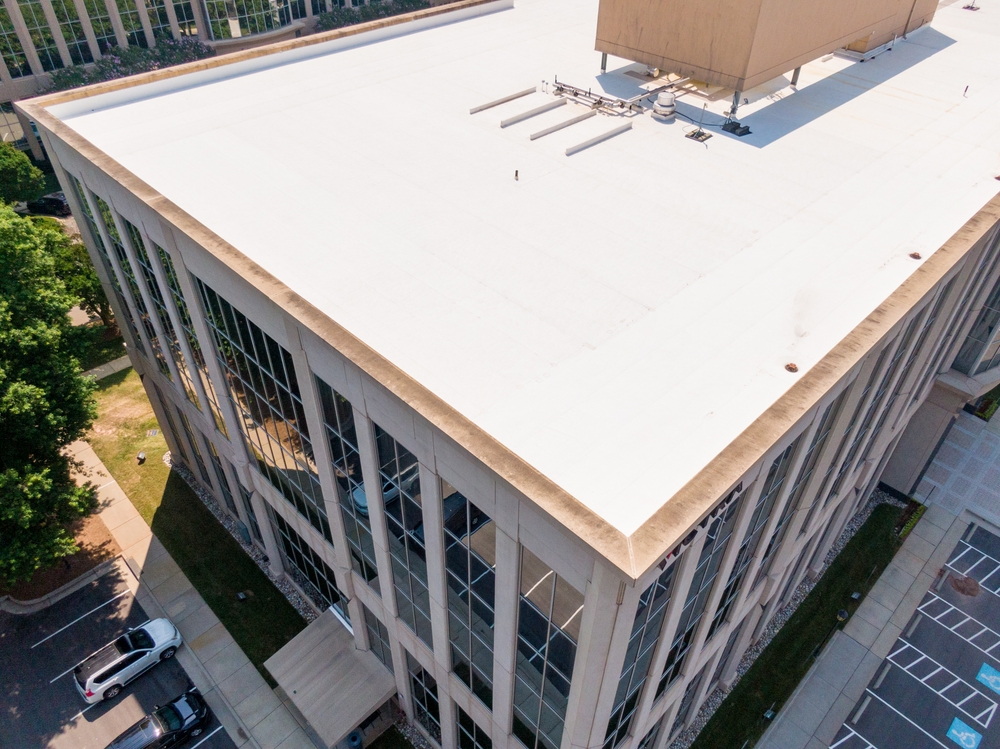
Choosing the right commercial roofing system is a big decision, and not just because of the price tag. For property owners across Southeastern Pennsylvania and New England, a new roof is a long-term investment that impacts operating costs, building performance, and even day-to-day comfort inside the property. The right roofing material can help you manage energy use, reduce maintenance headaches, and protect your building through years of unpredictable weather.
That’s why it’s important to consider more than just the upfront cost when choosing a commercial roofing type. Climate conditions, energy efficiency goals, how your building is used, and your expectations for long-term maintenance all play a role in selecting the right roofing system. And because flat and low-slope roofs are extremely common on commercial and industrial properties throughout this region, membrane roofing options like TPO, EPDM, and PVC are especially important to understand.
So, which one is right for you? Let’s break down the differences of TPO vs. EPDM vs. PVC roofing, so you can make a more confident decision.
TPO Roofing
TPO stands for Thermoplastic Olefin, and it has become one of the most popular commercial roofing materials in the United States for flat and low-slope roofs. It’s a single-ply membrane roofing system that is typically installed in large sheets, then sealed at the seams using heat welding.
What Makes TPO Unique?
TPO is known for being a strong middle-ground option: it offers many of the benefits of premium membrane systems while often coming in at a more budget-friendly price. It’s considered a modern roofing solution that performs well in a variety of climates, including the seasonal extremes seen across Southeastern PA and New England.
TPO’s Energy Efficiency and Reflectivity
One of the biggest selling points of TPO is its high reflectivity. TPO membranes are commonly produced in white or light colors designed to reflect sunlight instead of absorbing it. This can be a major advantage during humid Northeastern summers when rooftop heat can push HVAC systems into overdrive.
For buildings with high cooling demands — such as warehouses, retail properties, and large commercial spaces — a reflective roof can help reduce heat gain and support more consistent indoor temperatures. Over time, this can translate into lower cooling costs and reduced strain on mechanical systems.
TPO’s UV Resistance and Weather Performance
TPO is also valued for its UV resistance, which is important in areas where summer sun can be intense. Even though New England and Pennsylvania are known for winter weather, UV exposure can still be a major cause of long-term roof degradation. TPO is designed to hold up well under sunlight and resist cracking and surface breakdown.
TPO’s Seam Strength
TPO seams are heat-welded, meaning the sheets are fused together into a continuous bond. When installed correctly, heat-welded seams can be extremely strong and help reduce the risk of leaks, which is always a key concern for flat roofs.
TPO’s Cost-Effectiveness
TPO roofing is often chosen because it delivers a strong performance-to-cost ratio. While exact pricing depends on roof size, insulation requirements, and installation conditions, TPO is commonly viewed as a cost-effective option for property owners who want modern performance without stepping into the highest price tier.
TPO Roofing Is a Best Fit For:
TPO can be a great choice for property owners who want:
- A reflective roof that supports energy efficiency
- Strong seam performance
- A reliable membrane for mixed seasonal weather
- A cost-conscious solution for large commercial roof areas
EPDM Roofing
EPDM stands for Ethylene Propylene Diene Monomer, but most people simply refer to it as rubber roofing. EPDM has been used for decades in commercial roofing, and it’s known for being one of the most durable and weather-resistant membrane systems available.
Why EPDM Has Stayed Popular for So Long
EPDM’s reputation is built on one thing: dependability. It’s a flexible, rubber-based membrane designed to handle temperature extremes without becoming brittle or cracking.
That flexibility is especially valuable in Southeastern Pennsylvania and New England, where winter weather brings freeze-thaw cycles, ice, and sudden temperature swings.
EPDM’s Cold-Climate Performance
If your building is exposed to harsh winters, EPDM is often a strong contender. It performs extremely well in cold climates because it remains flexible even when temperatures drop. That flexibility helps it resist damage caused by:
- Thermal expansion and contraction
- Freeze-thaw cycles
- Snow and ice buildup
- Wind-driven winter weather
EPDM roofing is often seen on buildings that prioritize long-term durability and want a roofing system that can take a beating without requiring constant repairs.
EPDM’s Weather Resistance
EPDM roofing is also known for excellent resistance to weathering over time. It holds up well against rain, snow, and general exposure, making it a dependable option for buildings that need consistent protection year-round.
EPDM’s Energy Efficiency Considerations
One important thing to note is that EPDM is traditionally black, which means it absorbs more heat than reflective membranes like TPO or PVC. In colder climates, this can sometimes be seen as a benefit, as it may help with snow melt and reduce heating load slightly.
However, in summer months, black EPDM can increase rooftop heat and cooling demand. For buildings that prioritize energy efficiency, some owners choose white EPDM options or compensate with insulation upgrades.
EPDM Roofing Is a Best Fit For:
EPDM can be a great choice for property owners who want:
- Proven long-term durability
- Strong performance in cold weather and freeze-thaw cycles
- A roofing system with decades of real-world use
- A practical option for buildings where reflectivity isn’t the top priority
PVC Roofing
PVC stands for Polyvinyl Chloride, and it’s often considered the premium option among single-ply membrane systems. Like TPO, PVC is installed in sheets and sealed using heat-welded seams. However, PVC has unique strengths that make it stand out in certain industries and environments.
PVC’s Durability and Longevity
PVC is known for its strong durability and long-term performance. It’s built to handle tough rooftop conditions, and when properly installed and maintained, it can provide reliable protection for many years.
For commercial property owners who want a system designed to withstand demanding environments, PVC is often at the top of the list.
PVC’s Chemical and Grease Resistance
One of the biggest reasons property owners choose PVC is its chemical resistance. PVC is highly resistant to oils, grease, and certain industrial chemicals, which makes it a strong option for:
- Restaurants and commercial kitchens
- Manufacturing facilities
- Food processing buildings
- Properties with rooftop exhaust systems
- Buildings exposed to chemical runoff or contaminants
If your building has grease-laden exhaust fans or produces airborne contaminants, PVC can outperform other membranes that may break down faster under those conditions.
PVC’s Seam Strength and Leak Prevention
Seam strength is one of the most important factors for flat roofing systems because seams are typically the first area where leaks develop over time. PVC membranes are heat-welded at the seams, creating a strong, watertight bond.
PVC’s seam performance is one reason it’s often used on high-value buildings where leak prevention is a top priority.
PVC’s Performance in High-Moisture Environments
PVC is also well-suited for high-moisture environments, which can be especially important in parts of New England and Southeastern PA where humid summers, heavy rain, and snowmelt create constant moisture exposure.
PVC Roofing Is a Best Fit For:
PVC can be a great choice for property owners who need:
- Strong chemical and grease resistance
- High seam strength and leak prevention
- A membrane designed for demanding environments
- Excellent performance in humid or moisture-heavy conditions
Factors to Consider When Choosing Between TPO vs. EPDM vs. PVC Roofing
Once you understand the basic strengths of TPO, EPDM, and PVC, the next step is evaluating how those differences apply to your specific building. While all three are reliable membrane systems for flat and low-slope commercial roofs, the right choice depends on how each material aligns with your structure, budget, performance expectations, and industry demands.
Here are the key factors to weigh when deciding between TPO vs. EPDM vs. PVC roofing.
Building Structure and Roof Design
The size of the roof, the number of penetrations (HVAC units, vents, skylights), the drainage layout, and the overall slope can influence which membrane performs best.
For example, if your roof has complex detailing or multiple seams, systems with heat-welded seams — like TPO and PVC — may provide an advantage in terms of seam strength and leak resistance. On the other hand, EPDM’s flexibility makes it especially effective on roofs that experience structural movement due to temperature swings.
Additionally, if your building has a history of ponding water, your roofing contractor may recommend a membrane known for strong moisture resistance and seam integrity. A professional assessment ensures the system matches your roof’s structural realities.
Climate and Seasonal Performance
In Southeastern Pennsylvania and New England, roofing systems must handle all four seasons — and sometimes all within the same week.
If your property experiences significant freeze-thaw cycles, EPDM’s flexibility in cold temperatures may be particularly beneficial. It remains pliable even during harsh winters, reducing the risk of cracking due to contraction.
If summer heat and humidity are a bigger concern, reflective systems like TPO and PVC may help reduce rooftop heat absorption and support better energy performance during warmer months.
Budget and Lifecycle Costs
Initial installation cost is important, but long-term value matters just as much. While TPO is often seen as a cost-effective solution with strong all-around performance, PVC may come with a higher upfront investment due to its enhanced durability and chemical resistance. EPDM, meanwhile, has long been known for dependable performance at a competitive price point.
Energy Efficiency Goals
If reducing energy consumption is a priority, membrane reflectivity becomes a major factor.
TPO and PVC are commonly available in highly reflective white or light-colored surfaces that help deflect UV rays and minimize heat gain. This can be especially beneficial for large commercial buildings with high cooling loads during humid Northeastern summers.
EPDM, traditionally black, absorbs more heat. While this can be advantageous for snow melt in winter, it may increase cooling demand in the summer unless paired with strategic insulation planning.
Matching your roofing choice with your energy goals ensures your building operates more efficiently year-round.
Building Use and Industry-Specific Needs
The type of business operating inside your building plays a significant role in material selection. For example, restaurants and food-processing facilities often benefit from PVC’s grease and chemical resistance, while office buildings, warehouses, and retail properties may prioritize cost-efficiency and energy performance, making TPO a strong contender.
Understanding how rooftop conditions are affected by your operations can narrow the field quickly.
Long-Term Maintenance Planning
Every commercial roof requires routine inspections and maintenance, but different membranes respond differently to wear and tear. Consider questions like:
- Will there be frequent foot traffic from HVAC technicians?
- Do you want a system with decades of performance history?
- How important are heat-welded seams for your risk tolerance?
Thinking about your long-term maintenance strategy can help determine which membrane aligns best with your operational expectations.
Let JB Roofing Systems Help You Choose the Right Type of Roofing
There’s no single “best” roofing system for every commercial property — only the best one for your building, your climate, and your long-term goals. TPO, EPDM, and PVC each offer excellent advantages, but the right choice depends on factors like energy efficiency needs, weather exposure, building use, and maintenance expectations. The professionals at JB Roofing Systems can assess your building’s needs to recommend the most appropriate material for long-term performance.
If you’re considering a new roof or want help comparing membrane options, contact our team today to schedule a consultation and receive a customized roofing recommendation built around your property. In addition to TPO, EPDM, and PVC roofing systems, we also offer metal roofing systems.